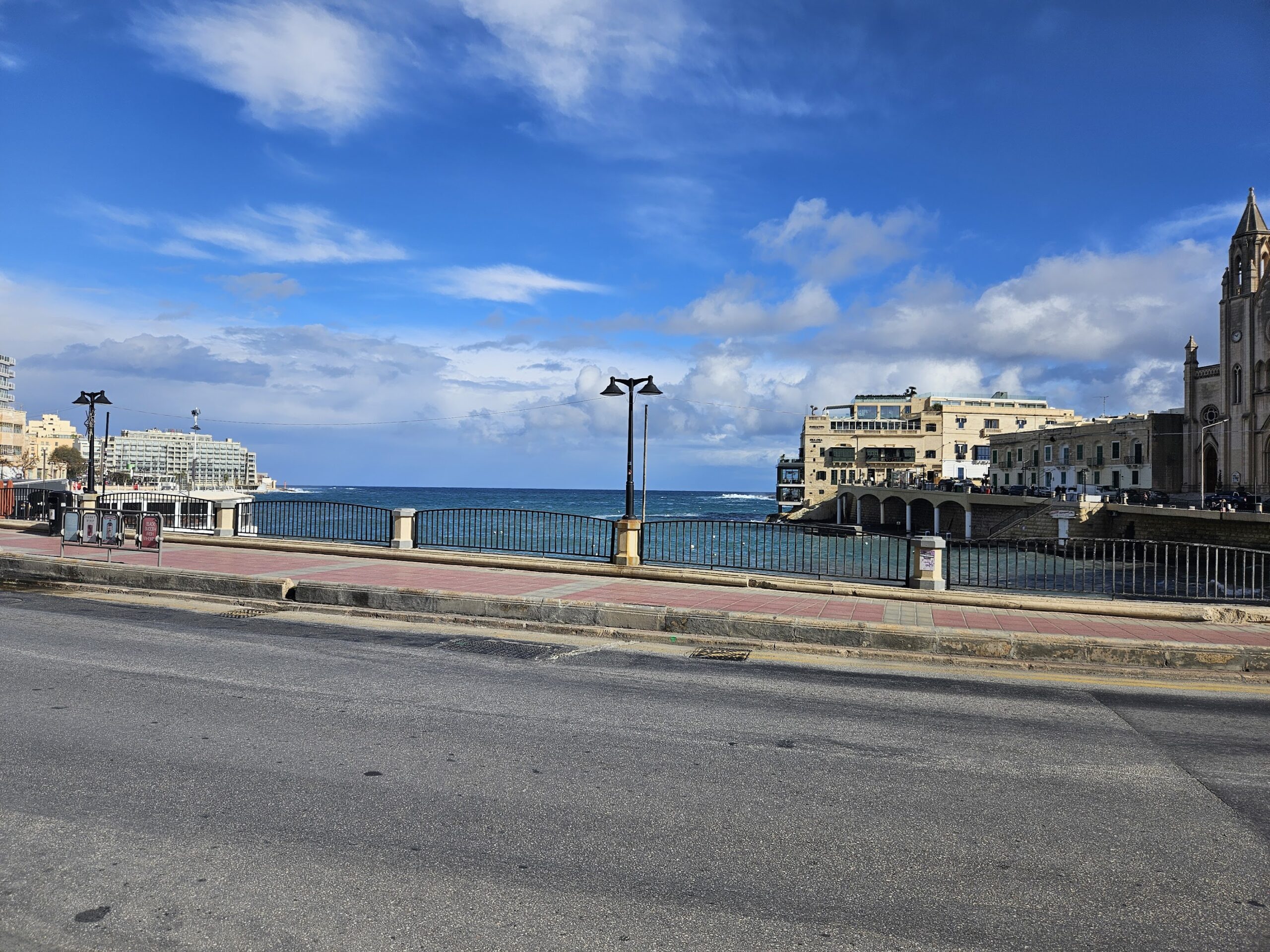

Our desire to visit Malta was born from a fifth-grade school project. Leigh studied the country of Malta as a kid and ever since, it had been on her bucket list — even though she couldn’t really explain why. So off we went, flying Lufthansa via Munich, arriving into the evening and taking a cab to the Marriott at St. Julian’s.
January in the Mediterranean is generally desirable — people escape Northern Europe for warmer temperatures. Unfortunately, the week we arrived was the one week of rain and crummy weather they had, sandwiched between stretches of outstanding beach weather on either side. But it is what it is.

We were upgraded at the Marriott St. Julian’s to a two-bedroom apartment-style suite and had all of our meals comped — simply by being a Marriott Titanium member, for which I am grateful. The hotel staff was great, and the neighborhood was very walkable, with restaurants and pubs within easy reach.


The Walled City of Mdina
This became our first inadvertent Game of Thrones tour — many of the warmer-weather filming locations from the show were actually shot on Malta. The walled city of Mdina served as a stand-in for King’s Landing in the first season, and walking through its medieval streets, you can see exactly why. Narrow, quiet, and beautifully preserved — it felt like stepping back in time.


The Three Cities
We also explored the area known as the Three Cities — Senglea, Vittoriosa, and Cospicua — three individual cities sitting on the water, each with their own distinct personality. The streets were narrow and medieval-looking, as you’d expect in an older, relatively untouched corner of the world.


The War Room
I learned a lot at the World War II cave bunker tour about the beginning of the end of the war — how Allied forces met in Malta to plan the invasion of Sicily, which started pushing back Mussolini and marked a turning point for the entire conflict. It was one of those experiences where the history just hits differently when you’re standing in the actual room where it happened.

Food, Beer, and Maltese Wine
The food was heavily seafood-based but there were plenty of other options — steaks, poultry, pasta. Everything was good and surprisingly inexpensive. We did sample Maltese wine and discovered that while tolerable and perfectly satisfactory for being local, we understand why Malta is not known for its vineyard prowess. The local Cisk lager, on the other hand, was a winner.


British Echoes and Crazy Cabbies
Malta’s British colonial past shows up in unexpected places — red phone booths, billiard halls, the English language everywhere. We took many inexpensive Uber rides and were impressed — for lack of a better term — by the drivers’ prowess in navigating narrow streets and tight curves at high rates of speed. We never felt unsafe. It was just an observation. Not too unlike some of our experiences in Italian cabs.

While Malta was pleasant and certainly didn’t disappoint, and I wouldn’t turn down an opportunity to go back if it presented itself, I don’t have a need to revisit intentionally. We didn’t see Gozo or any of the neighboring islands due to the weather and high surf, so perhaps a beach adventure would have changed things. But the history, the architecture, and those narrow medieval streets — those were worth the trip on their own.