After a week in Barcelona, the four of us — Leigh, Steph, Jenn, and I — boarded the AVE high-speed train for Madrid. Spain’s rail system is genuinely impressive, and watching the departure board click over to our train felt like the start of a new chapter.


The ride wasn’t long, and before we knew it we were pulling into Madrid’s Puerta de Atocha station — a grand, historic terminal that sets the tone for the city.

We took a taxi to the Edition Hotel by Marriott, located on a great pedestrian walkway with plenty of food, dining, and tourism options nearby, and a close-by metro station. The hotel itself was stunning — a boutique property with a distinct artistic style.

Every morning in Madrid started the same way — finding a fantastic little sidewalk café for a cappuccino and a croissant, watching the city wake up around us. The coffee culture here is no joke.

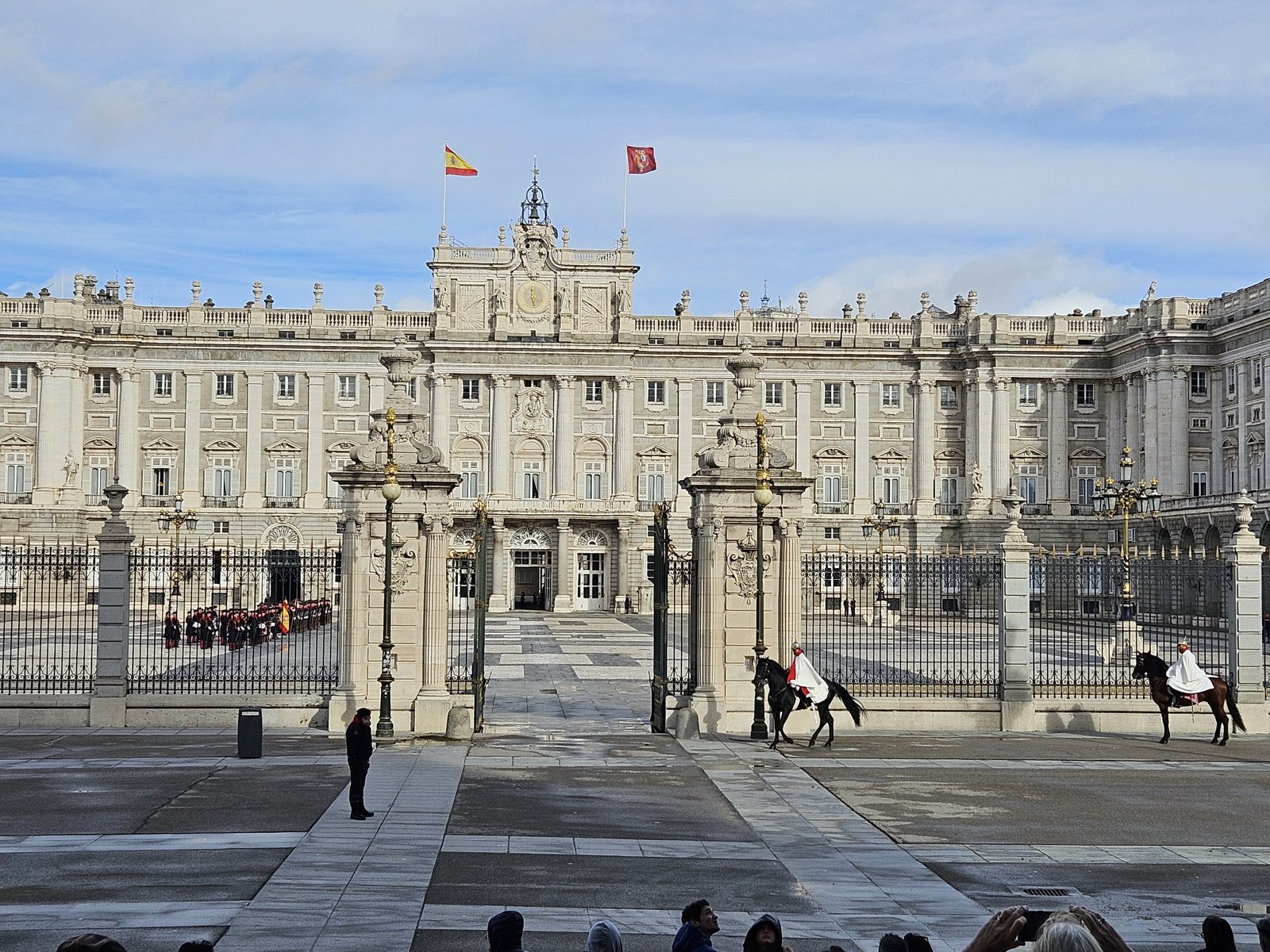
The Royal Palace of Madrid was a highlight. We happened to arrive during an official procession — mounted guards in full dress, dignitaries arriving, the whole production. A broken-Spanish conversation with a local gendarme revealed it was foreign dignitaries meeting with representatives of the king. The security was no joke either — I spotted a figure on the rooftop keeping watch.


We visited the Prado Museum, which I had previously seen in 1987 during my last visit to Madrid. Coming back nearly 40 years later was surreal — the collection is as impressive as ever.

Puerta del Sol is the beating heart of Madrid — a massive plaza that serves as the city’s central gathering point. Street performers, living statues, and tourists from every corner of the world fill the square at all hours.

One evening, we ate at Sobrino de Botín — the oldest continuously operating restaurant in the world, established in 1725 and holding a Guinness World Record to prove it. We had reservations along with about a hundred other people when the doors opened at 7 PM. Every server had every table eating the same thing at the same time. The seating was cramped, the service was predictably stretched thin, but the food was good enough and the experience of dining in the world’s oldest restaurant? That’s one for the books.

One of the more memorable experiences in Madrid had nothing to do with palaces or museums — it was buying cookies from cloistered nuns. We stumbled upon the Monasterio del Corpus Christi, known locally as “Las Carboneras,” tucked away on a quiet side street. From the outside, there’s almost nothing to indicate what’s inside — just an ancient wooden door with a small “Venta de Dulces” sign and an intercom buzzer.


You ring the buzzer, speak through the intercom in Spanish (the nuns don’t come out — ever), and then step inside to a small vestibule with a wooden torno — a revolving window built into the wall. You put your money on the turntable, spin it through, and a moment later it comes back with your cookies. No eye contact, no small talk, just pastries through a hole in the wall from women who’ve taken a vow of seclusion. The cookies were just okay, but the experience of finding the hidden convent and buying through the spinny hole was unforgettable.

And then there were the churros. Madrid is serious about its churros con chocolate — thick, hot chocolate for dipping, with fresh churros made right in front of you. The perfect breakfast or late-night snack.


Madrid was the perfect final chapter of our Spain trip. From the high-speed train arrival to the palace processions, the churros, the Prado, and Botín, this city delivered. I really enjoyed Madrid, and I would absolutely go back. Spain as a whole surprised me — three cities, two and a half weeks, and I feel like we barely scratched the surface.