After three days in Valencia, we boarded the train north to Barcelona — Spain’s second city and the capital of Catalonia. If you know anything about Catalonia, you know they consider themselves a bit separate from the rest of Spain. The food is different, the language has its own flavor, and the locals have a pride that’s distinctly their own.

We checked into Le Méridien on Las Ramblas — perfectly situated in the middle of everything. Right across the street was Bar Lobo, which quickly became our regular spot. And just down the street was a breakfast place where a certain famous hot chocolate drink was invented — the kind of place you stumble into and then can’t stop going back to.

Las Ramblas is everything you’ve heard — a wide, tree-lined pedestrian boulevard packed with street performers, flower stands, cafés, and tourists. It runs from Plaça de Catalunya all the way down to the Columbus Monument at the harbor. Walking it at different times of day gives you completely different experiences.

La Boqueria market is a must. Fresh juices, jamón, seafood, pastries, and flavors from every corner of Spain. It’s touristy, sure, but the food is real and the energy is infectious.

The Gothic Quarter is where Barcelona shows its age — in the best way. Narrow medieval alleys open up to hidden plazas, and you can wander for hours without seeing the same street twice. The Barcelona Cathedral anchors the neighborhood with its towering Gothic facade.

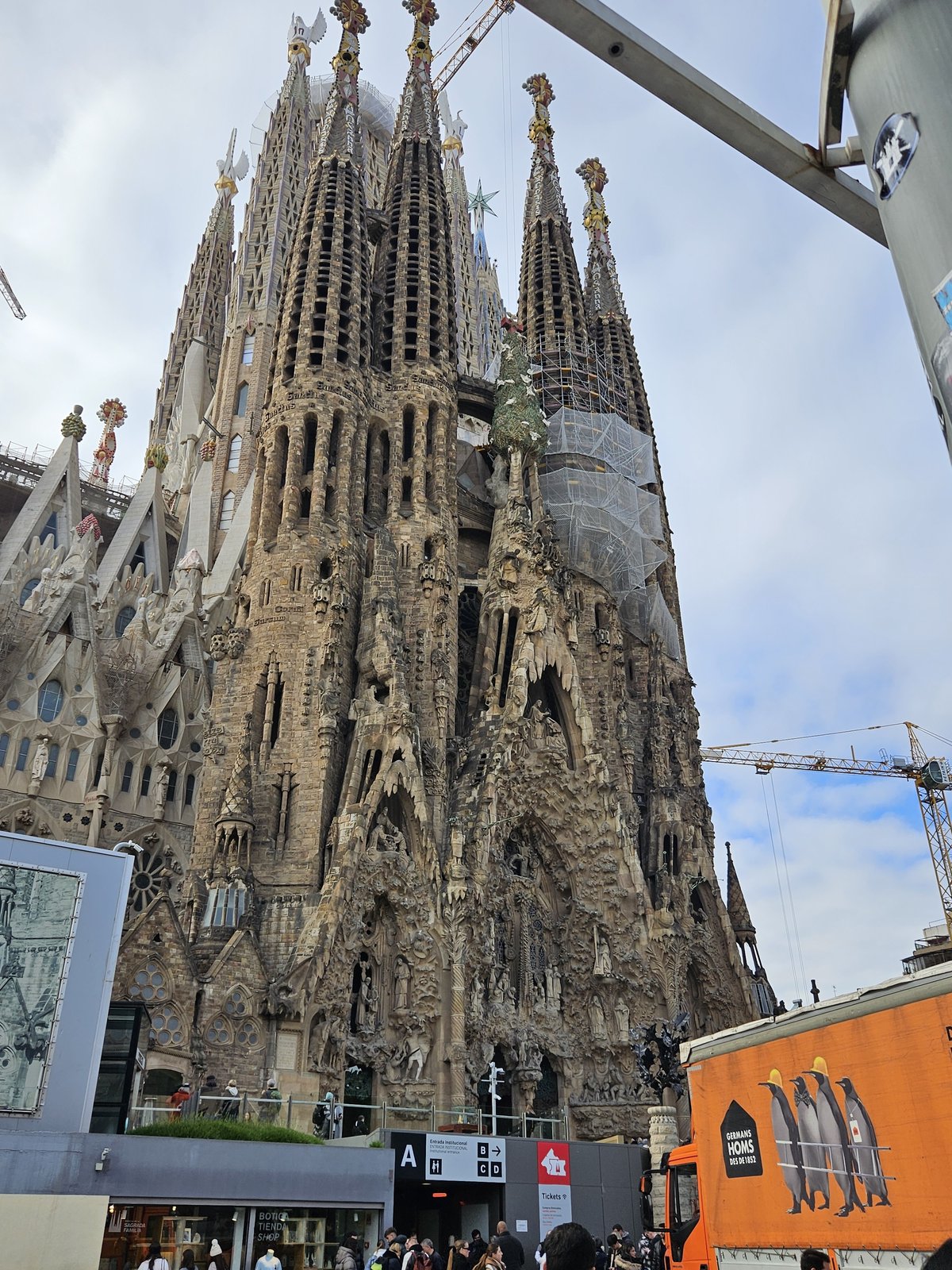
But the real showstopper — the reason most people come to Barcelona — is La Sagrada Familia. Gaudí’s unfinished masterpiece has been under construction since 1882, and it is unlike anything else on Earth.


The interior is where it really gets you. Gaudí designed the columns to branch like trees, and the stained glass throws color across the nave in a way that makes the whole space feel alive. Photos don’t do it justice. We took a prepaid taxi to get there — and I’m fairly sure we got overcharged, since the flat rate would have been much less than the running meter. Lesson learned.


On our second day, our friends Stephanie and Jennifer arrived from San Francisco and joined us for the rest of the trip. They helped guide our culinary adventures through Barcelona — and believe me, having California foodies leading the charge through a city like this made a real difference. One standout was El Nacional on Passeig de Gràcia — a stunning restored 1889 building that houses four different restaurants and four bars under one grand roof. Seafood, meat, tapas, cocktails — all in this beautiful open space. It’s not one restaurant, it’s a curated collection of them, and the building itself is worth the visit.


I’m a soccer fan and a soccer coach, so FC Barcelona was non-negotiable. The museum at Camp Nou is impressive — decades of trophies, history, and the passion of a city that lives and breathes this sport.


For those of you who watched Friends — yes, Mount Tibidabo is real. And it’s pretty cool. The views of Barcelona from up there are incredible, and there’s an old amusement park at the top that feels frozen in time.
Barcelona was everything I expected and more. A week was just enough to scratch the surface. After seven days of Gaudí, Gothic alleys, Boqueria juices, and FC Barcelona, we packed up and boarded the AVE for Madrid.